
Date
Category
A certificate of analysis is the document that converts a marketing claim into a verified result. For research peptides, where minor variation in purity or counter-ion content can change experimental outcomes, the COA is not optional reading. It is the primary evidence that the material in the vial is what the supplier says it is.
This guide explains what a credible peptide COA contains, how to read each section, and which signals separate a meaningful document from a generic template.
This content is provided for informational and educational purposes only and does not constitute medical, pharmaceutical, or legal advice. The products discussed are intended for laboratory research purposes only and are not for human or animal consumption. They are not intended to diagnose, treat, cure, or prevent any disease.
What a certificate of analysis actually is
A certificate of analysis (COA) is a document issued by an analytical laboratory that records the test results for a specific batch of a compound. It states what was measured, how it was measured, and what the results showed.
A COA is not a specification sheet. A specification sheet states what the product is supposed to be. A COA states what the testing actually found. The two documents serve different purposes, and confusing them is a common source of error when evaluating a supplier.
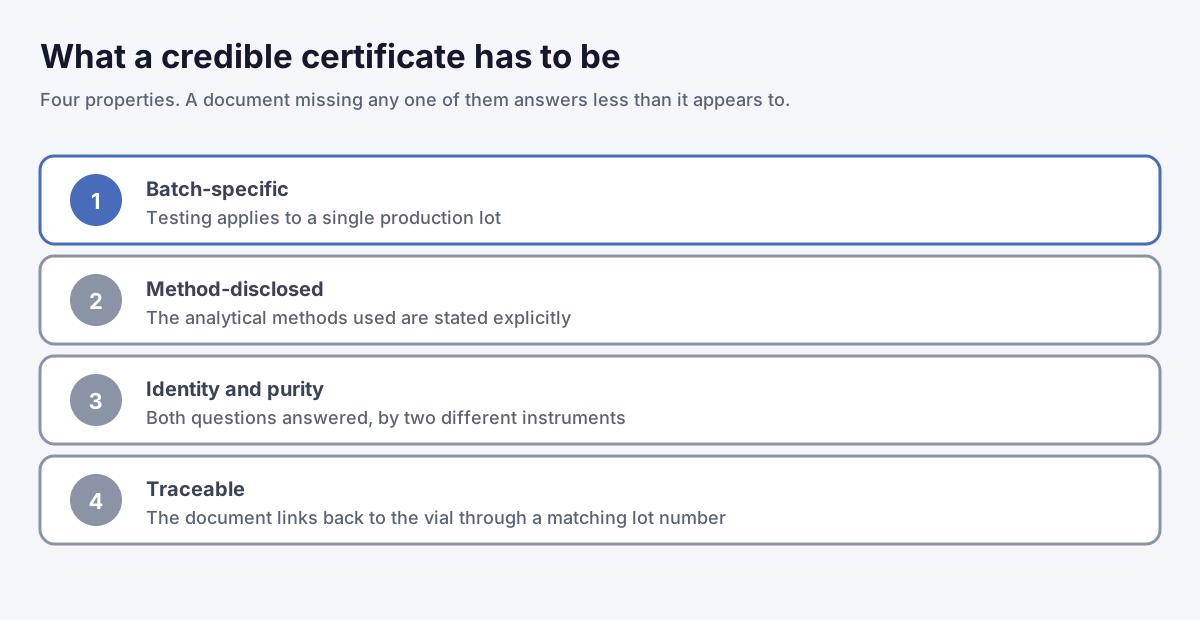
A credible COA shares three characteristics. It is batch-specific (the testing applies to one production lot, not to a product family). It is method-disclosed (the analytical methods used are stated explicitly, not implied). And it is traceable (the document links a specific lot number to a specific laboratory, on a specific date, with a specific analyst or QC signature).
If any one of those three is missing, the document cannot perform its core function.
Why COAs matter for peptide research
Each peptide synthesis run produces a unique batch. Differences in raw materials, synthesis conditions, and purification efficiency mean no two batches are identical at the molecular level (Pharmaceutical Research, 2023). Variation in purity, counter-ion content, or water content can shift the actual mass of peptide in a vial without changing the label.
In a research context, that variation matters in three ways:
Reproducibility. If two batches of a peptide differ in net peptide content by 10%, experiments using mass-based concentrations are not comparable across batches without correction.
Impurity profile. Synthesis impurities can have biological activity of their own. A 97% pure peptide is not just "1% less of the right thing", the remaining 3% is something specific, with its own chemistry.
Documentation for publication. Peer-reviewed journals increasingly require batch and purity documentation in materials and methods sections. The COA is the source document for that disclosure.
The COA is how a researcher confirms that the material in the vial is suitable for the work being planned, and that the work will be defensible when it is written up.
The four things every credible COA must verify
Before reading any individual field, four high-level questions should be answered by the document. If any of these is not answerable from the COA, the document is incomplete.
Question | Where it is answered on a COA |
|---|---|
Is this the right compound? | Identity testing section (mass spectrometry, sometimes amino acid analysis) |
How pure is it? | HPLC purity section, reported as % area |
Does this COA apply to the vial in my hand? | Batch / lot number field, cross-referenced with the vial label |
Who did the testing, and is the testing recent? | Laboratory name and accreditation, date of analysis |
These four questions are the structural backbone of any peptide COA. Everything else in the document supports one of them.
Reading a peptide COA field by field
The sections below cover what each part of a typical research peptide COA records, what acceptable results look like, and what the common variations mean.

Product identification and batch traceability
The top of a COA should identify the product and the specific batch. Expected fields include:
Product name. The peptide's common designation (for example, BPC-157), ideally accompanied by the systematic name or sequence
CAS number. The Chemical Abstracts Service identifier, when one has been assigned
Sequence. The amino acid sequence in one-letter or three-letter code
Molecular formula. The elemental composition
Molecular weight. Stated in daltons or g/mol, calculated from the formula
Lot or batch number. The unique identifier for the specific production run
Date of synthesis. When the batch was produced
Date of analysis. When the testing was performed
Expiry or retest date. When the documented stability data become unreliable
The batch number must match the vial label exactly. A COA with a batch number that does not match the physical product cannot be used to verify that product. This is the most common point of failure in COA documentation.
Identity testing: mass spectrometry
Mass spectrometry (MS) confirms that the molecule in the vial has the expected molecular weight. For peptides, the typical readout is either electrospray ionization mass spectrometry (ESI-MS) or matrix-assisted laser desorption/ionization (MALDI-MS).
A credible identity section on a COA includes:
The theoretical mass calculated from the molecular formula
The observed mass from the analytical run
The mass error between theoretical and observed, typically reported in parts per million (ppm) or daltons
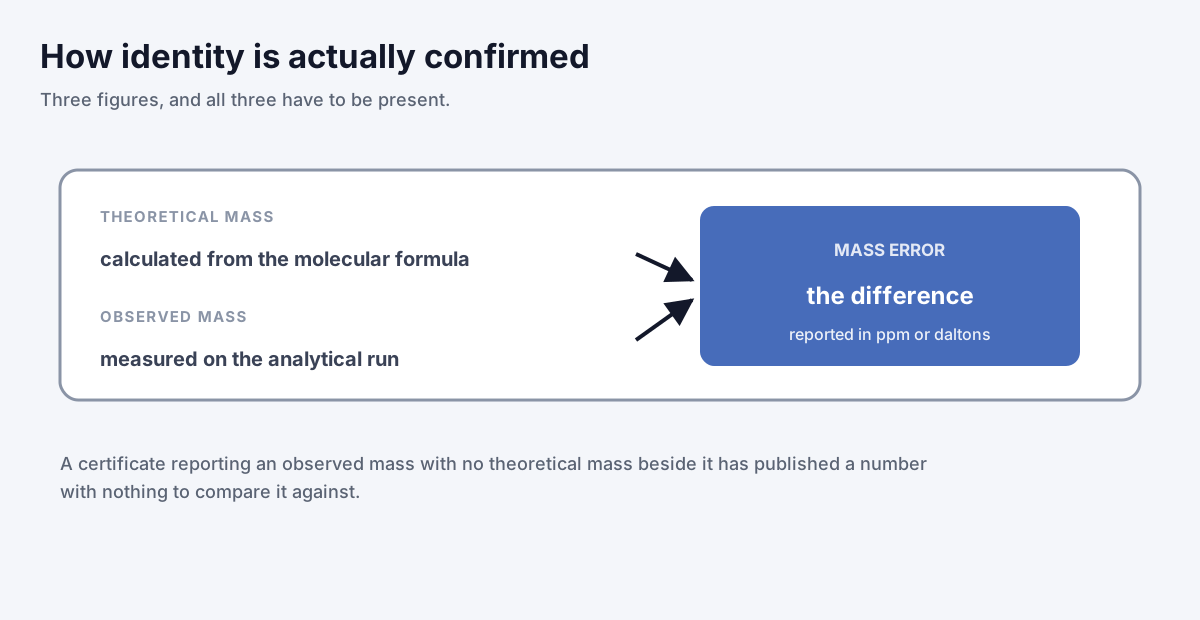
The observed mass should match the theoretical mass within instrument tolerance. For a research-grade peptide on a modern instrument, the observed mass typically falls within 0.1 to 1.0 daltons of theoretical, depending on instrument resolution. Larger deviations indicate either a different molecule, incomplete deprotection during synthesis, or instrument calibration problems.
For some peptides, identity is further confirmed by amino acid analysis (AAA), which hydrolyzes the peptide into its constituent amino acids and quantifies them. AAA provides orthogonal confirmation of composition and is used by the United States Pharmacopeia as one of the methods for reference standard value assignment (PubMed Central, 2019).
Purity testing: HPLC
High-performance liquid chromatography (HPLC) is the standard method for determining peptide purity. The technique separates the components of a sample by passing them through a chromatographic column, with each component eluting at a characteristic retention time.
For peptide research, purity is reported as % area by HPLC. This represents the peak area of the target peptide as a proportion of all peaks detected during the run. A result of 98.5% area means 98.5% of the UV-absorbing material in the sample is the target compound, with the remaining 1.5% being impurities, degradation products, or synthesis by-products.
A complete purity section on a COA includes:
Method details. Column type and dimensions, mobile phase composition, gradient profile, flow rate, and detection wavelength (usually 214 nm or 220 nm for peptide bonds)
Purity result. Reported as % area, with the assay specification stated for context
Chromatogram. A visual record of the HPLC run, showing peak shape, retention time, and the relative size of the target peak versus any impurity peaks
A high-purity peptide chromatogram shows one dominant, sharp peak at the expected retention time, with only minor satellite peaks. Broad peaks, multiple peaks of similar height, or significant baseline noise all reduce confidence in the result.
The relevant pharmacopoeial standard for HPLC method validation is USP General Chapter <1225> Validation of Compendial Procedures, which sets requirements for accuracy, precision, specificity, detection limit, quantitation limit, linearity, and range (PolyPeptide, 2019). A COA referencing a USP-aligned method carries more weight than one that does not.
Net peptide content versus gross weight
This is the most commonly misunderstood part of a peptide COA, and the section where the difference between a thorough supplier and a casual one becomes most visible.
Gross weight is the total mass of material in the vial. Net peptide content is the mass of actual peptide in that material, after subtracting water, counter-ions, and residual solvents.
The two numbers can differ substantially. A vial labelled "5 mg" by gross weight might contain only 4.2 mg of net peptide, with the remaining 0.8 mg being water and trifluoroacetate counter-ions from the synthesis. Researchers calculating concentrations from the label without accounting for net peptide content will systematically work at lower concentrations than they intend.
A complete COA reports:
Peptide content (%). The proportion of the gross mass that is actual peptide
Calculation basis. Whether peptide content was determined by HPLC assay against a reference standard, by amino acid analysis, or by mass balance from water and counter-ion content
Suppliers that omit net peptide content from their COAs make accurate concentration calculations harder to perform. The information should be on the document.
Counter-ion content
Synthetic peptides made by solid-phase peptide synthesis using Fmoc chemistry are typically isolated as trifluoroacetate (TFA) salts. The TFA molecule is the counter-ion that pairs with positively charged groups on the peptide.
A COA should state the counter-ion identity and, when relevant, the counter-ion content as a weight percentage. For research peptides, TFA content typically ranges from 5% to 20% by weight, depending on the number of basic residues in the sequence.
Some research applications require acetate-form peptides rather than TFA-form, in which case the COA should document the salt exchange and confirm residual TFA below an acceptable threshold.
Water content
Lyophilized peptides contain residual water. Water content is typically measured by Karl Fischer titration and reported as a weight percentage on the COA. Values in the 3% to 10% range are typical for freshly lyophilized peptides.
Water content matters for two reasons. It affects net peptide content calculations, and it affects long-term stability. Peptides with high water content degrade faster than those with low water content, all else being equal.
Residual solvents
The synthesis and purification of research peptides involves organic solvents such as acetonitrile, dimethylformamide, dichloromethane, and trifluoroacetic acid. Residual amounts of these solvents may remain in the final product.
A complete COA reports residual solvents either as individual values or as confirmation that the levels are below pharmacopoeial limits, typically referencing USP General Chapter <467> Residual Solvents or its International Council for Harmonisation (ICH) Q3C equivalent.
Microbiological and safety testing
For some research applications, peptide preparations are tested for microbial contamination. The two most common tests on research peptide COAs are:
Bacterial endotoxin testing by the Limulus amebocyte lysate (LAL) method, reported in endotoxin units per milligram (EU/mg). The relevant pharmacopoeial standard is USP General Chapter <85>.
Bioburden or total viable count, reported as colony-forming units per gram.
It is important to understand the limits of these tests. HPLC, mass spectrometry, and NMR are chemical purity techniques. They do not detect endotoxin contamination (Peptide Partners, 2025). A peptide can pass all standard chemical purity tests and still contain endotoxin if microbiological testing was not performed. For research applications where endotoxin matters, the COA should explicitly document the test.
Laboratory authorship and signatures
A COA should identify the laboratory that performed the testing. Expected fields include:
Laboratory name and address
Accreditation status. ISO/IEC 17025 accreditation is the international benchmark for analytical testing laboratory quality (ISO, 2017)
Analyst or QC officer signature. A real name, with date, attached to the document
Date of release
A document without any of these is anonymous, and an anonymous COA cannot be relied on to support published research.
Comparing two certificates for the same compound
A single certificate tells you about one lot. Two certificates for the same compound tell you something a single one cannot: whether the supplier's process is stable.
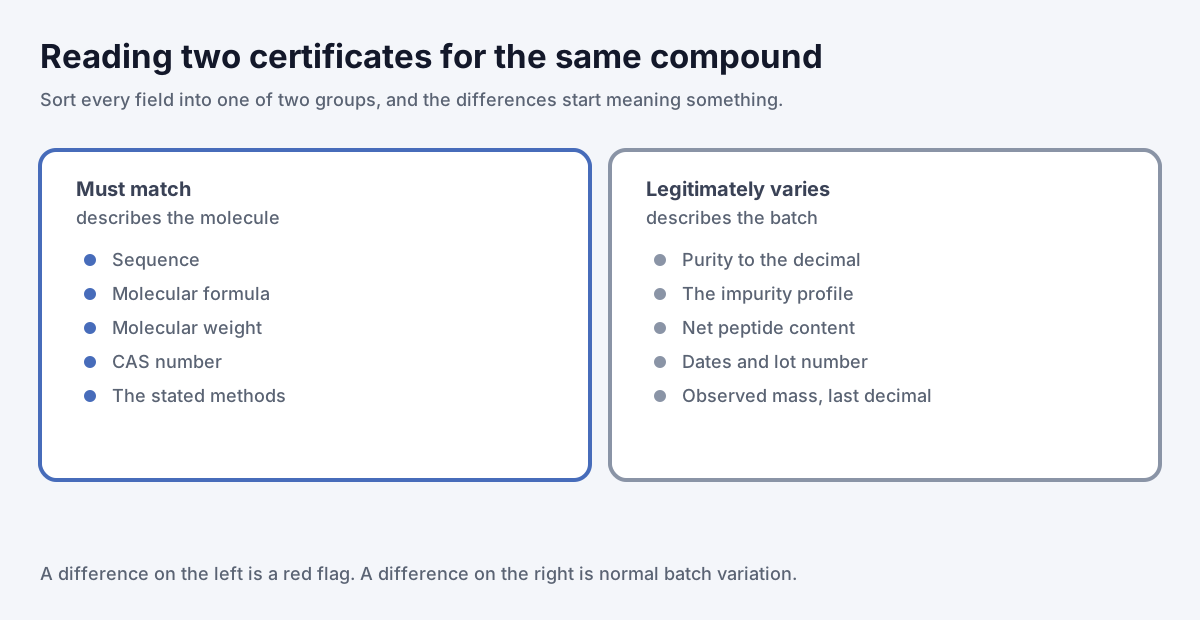
This is the check almost nobody runs, and it costs nothing once a second document exists. Read the two side by side and sort every field into one of two groups.
What must match
These describe the molecule rather than the batch, so a difference between lots is a red flag rather than a variation.
Sequence. The same compound has the same sequence. A difference means one document is for something else.
Molecular formula and molecular weight. Both are calculated from the sequence, so they follow it.
CAS number, where one has been assigned. A registry number identifies a substance and does not change between production runs.
The stated analytical methods. A supplier that reported purity by RP-HPLC on one lot and by an unnamed method on the next has changed what the figure means, which makes the two numbers less comparable than they look.
What legitimately varies
These describe the batch, and variation here is normal.
Purity to the decimal. Two runs at 98.7 and 99.1 percent are both doing what they should. The direction of drift across several lots is more informative than any single figure.
The impurity profile. Which minor peaks appear, and at what size, depends on how a specific run behaved. The classes involved are covered in our guide to synthesis impurities.
Net peptide content. Counter-ion and residual moisture content vary by run, which is why this figure is reported separately from purity. Our guide to counter-ions covers where the difference comes from.
Dates, lot number, and observed mass to the last decimal. All batch-specific by definition.
What a pattern across lots tells you
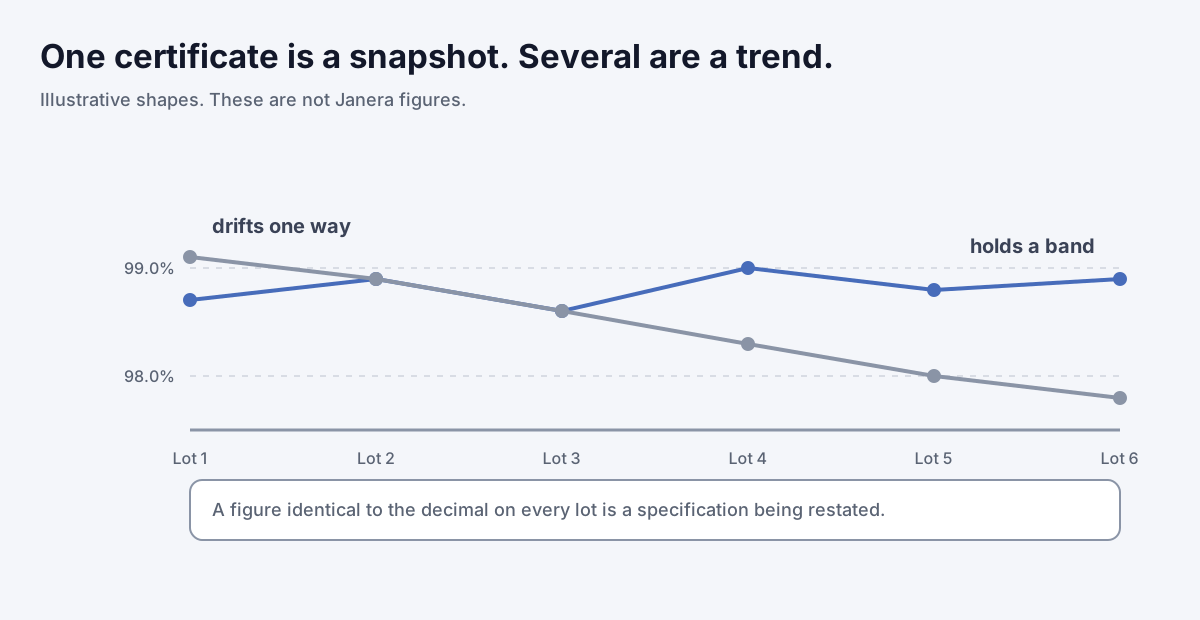
Three or four certificates for the same compound turn a set of snapshots into a trend, and the trend answers questions no individual document can.
Purity that holds within a narrow band across runs indicates a controlled process. Purity that drifts steadily in one direction, or swings widely, indicates a process that is not yet settled, even when every individual lot passes. A supplier whose reported figure is identical to the decimal on every lot is reporting a specification rather than a measurement, which is its own signal.
This is also the practical argument for recording the lot number of every vial used. A researcher who has kept those numbers can build this comparison later; one who has not cannot reconstruct it. Our guide to batch traceability covers the record chain that makes it possible.
Third-party testing and what ISO 17025 means
The most consequential question buyers can ask about a COA is who did the testing.
A COA can be issued by the manufacturer itself (in-house testing) or by an independent analytical laboratory (third-party testing). Both can be legitimate. They are not equivalent.
ISO/IEC 17025 is the international standard that defines general requirements for the competence of testing and calibration laboratories (ISO, 2017). Laboratories accredited to ISO/IEC 17025 have been independently assessed on their quality management system, the technical competence of their personnel, the validation of their methods, and the traceability of their measurements. The accreditation is granted by national accreditation bodies and is renewed periodically through reassessment.
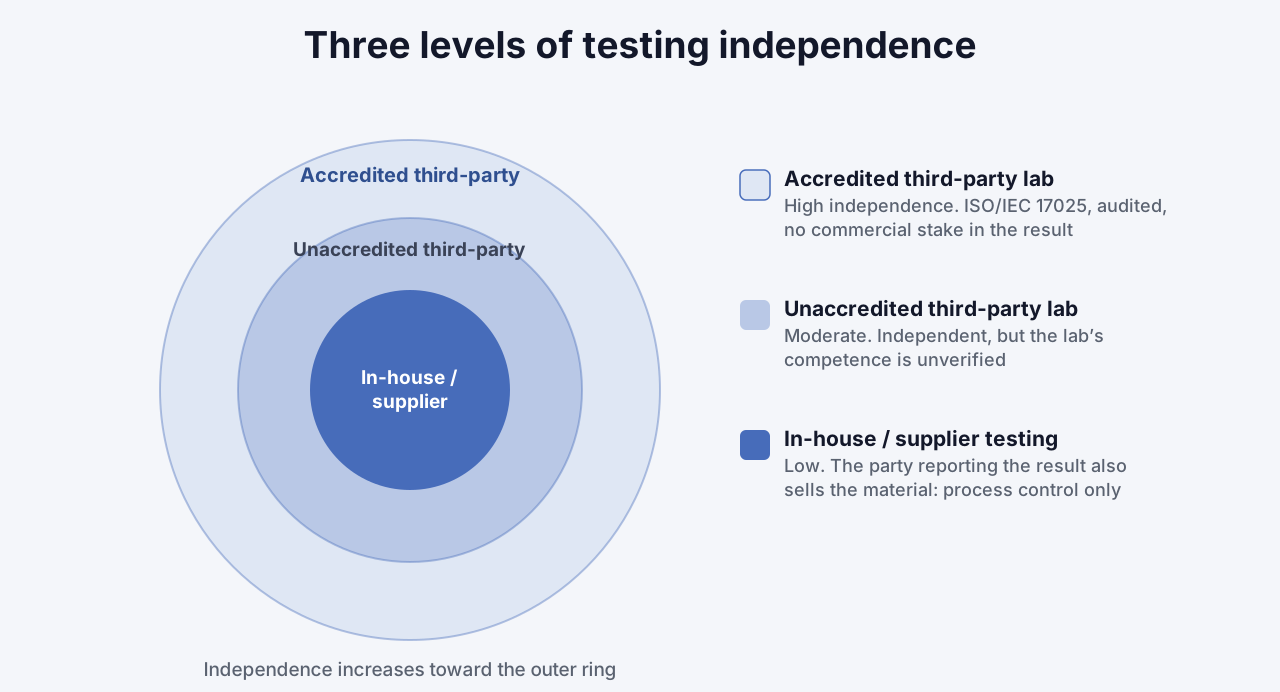
A COA from an ISO/IEC 17025 accredited laboratory carries three guarantees that a non-accredited in-house COA does not:
Independence. The lab has no ownership relationship with the supplier
Method validation. The analytical methods have been validated against documented criteria
Traceability. Measurements link back to recognized reference standards
For a research workflow that may eventually contribute to a published manuscript or a regulatory submission, third-party COAs from accredited labs are the documentation standard. In-house COAs can supplement that documentation but are weaker as standalone evidence.
How to spot a weak or fraudulent COA
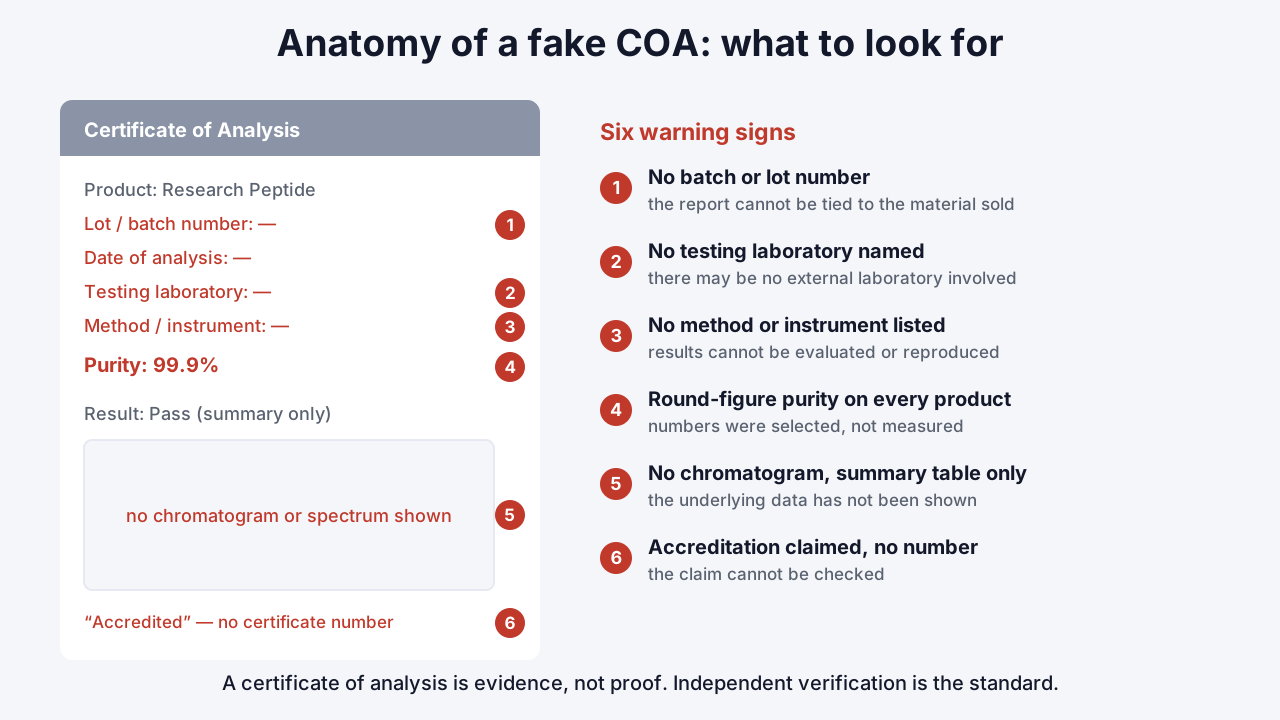
The structural markers of a problematic COA are recognizable once the format is familiar. The most common red flags are listed below.
Red flag | Why it matters |
|---|---|
No batch number, or a batch number that does not match the vial | The document cannot be linked to the specific material |
Generic template used across multiple products or batches | Indicates the COA is not actually based on testing of this batch |
Purity stated as a percentage with no chromatogram or method details | The number cannot be independently evaluated |
Vague phrases like "high purity" or "tested for quality" with no figures | Marketing language, not analytical data |
No mass spectrometry result | Identity is not confirmed |
No date of analysis, or a date more than 12 to 24 months old | Testing may not reflect current material |
No signatures, analyst name, or laboratory identification | The document is anonymous |
Cropped, blurred, or low-resolution scan | Suggests the original document was modified |
In-house testing only, with no third-party verification offered | Supplier is the only auditor of its own claims |
A document showing any one of these does not automatically prove fraud. A document showing several of them in combination has limited evidentiary value, regardless of what the purity number says.
When a certificate is not available at all
A missing document is a different situation from a weak one, and it has a legitimate explanation as well as an illegitimate one.
The legitimate case is timing. A certificate is issued against a released production lot, so a compound sitting between runs has no current document until the next batch is released and tested. A supplier showing that state openly is describing its stock position accurately.
The illegitimate case is a supplier that offers material for sale while providing no lot-level documentation for it, and answers the question with a general quality statement rather than a document.
The distinguishing question is whether the material is being sold. Documentation that is pending for an out-of-stock compound is a scheduling fact. Documentation that is absent for a compound available to buy today means the purchase cannot be verified before it is made, whatever the supplier's general claims say.
Where a Janera compound is between production runs, its certificate is published with the next batch. Current availability and documents are listed together on the lab results page.
How this connects to Research Use Only
The certificate of analysis is the part of an RUO supply chain that turns the regulatory designation into something verifiable. As covered in the foundation article on Research Use Only, the RUO label by itself does not guarantee anything about the material in the vial. The documentation behind the label is what matters.
A responsible RUO supplier publishes batch-specific COAs from accredited laboratories, makes them easy to find, and presents them without marketing language. A supplier that claims RUO status while declining to provide meaningful COAs is, in regulatory terms and in practice, using the designation for cover rather than for substance.
Frequently Asked Questions
What is a certificate of analysis for a peptide?
A certificate of analysis (COA) is a document issued by an analytical laboratory that records the test results for a specific batch of peptide. It documents identity (typically by mass spectrometry), purity (typically by HPLC), and other analytical parameters relevant to research use (Pharmaceutical Research, 2023).
What HPLC purity is acceptable for research peptides?
For most research applications, ≥98% area by HPLC is the standard minimum specification. Applications involving high-sensitivity assays, structural studies, or work intended for publication often require ≥99% purity. The purity number alone is incomplete without method details and a chromatogram showing the peak profile.
What does "net peptide content" mean on a COA?
Net peptide content is the proportion of the gross mass in a vial that is actual peptide, after subtracting water, counter-ions, and residual solvents. A vial labelled "5 mg" by gross weight typically contains less than 5 mg of net peptide, often in the range of 4.0 to 4.8 mg depending on counter-ion content and water content. Researchers calculating concentrations should use net peptide content rather than gross weight where possible.
What is ISO 17025 accreditation, and why does it matter?
ISO/IEC 17025 is the international standard for the competence of testing and calibration laboratories (ISO, 2017). Laboratories accredited to the standard have been independently assessed on their quality system, technical competence, method validation, and measurement traceability. A COA from an ISO/IEC 17025 accredited laboratory carries stronger documentation weight than one from a non-accredited in-house laboratory.
Can HPLC and mass spectrometry detect endotoxin contamination?
No. HPLC, mass spectrometry, and NMR are chemical purity techniques. They do not detect bacterial endotoxin (Peptide Partners, 2025). For research applications where endotoxin matters, a separate bacterial endotoxin test (typically by the LAL method, per USP General Chapter <85>) should appear on the COA.
How old can a COA be before it is no longer reliable?
The date of analysis should be reasonably recent relative to the lot. A COA more than 12 to 24 months old, depending on the compound and storage conditions, may no longer reflect the current state of the material. Stability data on the COA, where provided, indicate how long the documented results are expected to remain valid.
How can I tell if a COA is generic versus batch-specific?
A batch-specific COA has a unique lot number, dates, and signatures that change from batch to batch. A generic template will look identical across multiple batches, with only the product name varying. The fastest test is to ask a supplier for the COA covering two different lots of the same product. If the documents are visually identical apart from the product name, neither one is documenting actual testing.
Key Takeaways
A COA is batch-specific evidence, not a product spec. It records what the testing of a specific lot found. If the lot number on the COA does not match the vial, the document does not apply (Pharmaceutical Research, 2023).
Four questions every COA must answer. Is this the right compound (identity)? How pure is it (HPLC % area)? Does this document apply to this vial (batch number)? Who did the testing and when (laboratory and date)?
Method matters as much as the result. A purity number without method details and a chromatogram cannot be independently evaluated. USP General Chapter <1225> defines the validation requirements for analytical methods used in pharmacopoeial work (PolyPeptide, 2019).
Net peptide content is not the same as gross weight. Researchers calculating concentrations should use net peptide content where reported. Suppliers that omit it make accurate dosing calculations harder.
Chemical purity does not equal microbiological safety. HPLC and mass spectrometry do not detect endotoxin. For applications where endotoxin matters, a separate test per USP General Chapter <85> should appear on the COA (Peptide Partners, 2025).
ISO/IEC 17025 third-party COAs are the strongest documentation. Accredited laboratories carry independent verification of competence, method validation, and traceability (ISO, 2017).
Verify Every Batch Before You Order
Now that you know what a credible COA shows, here are ours. Janera publishes a current, batch-specific certificate of analysis for every peptide in the catalog. Identity confirmation, HPLC purity, mass-spectrometric verification, and full lot traceability. Open and downloadable.